
Every fiber run ends with a concrete hardware commitment: lock your optical termination into a soldered board-mount connector or spend capital on hot-pluggable modular cages. Network engineers sizing edge aggregation or campus runs often default to SFP cages out of habit. That habit adds transceiver costs, inventory overhead, and insertion loss vulnerabilities that make little sense when a plant’s physical reach is already fixed for the next decade.
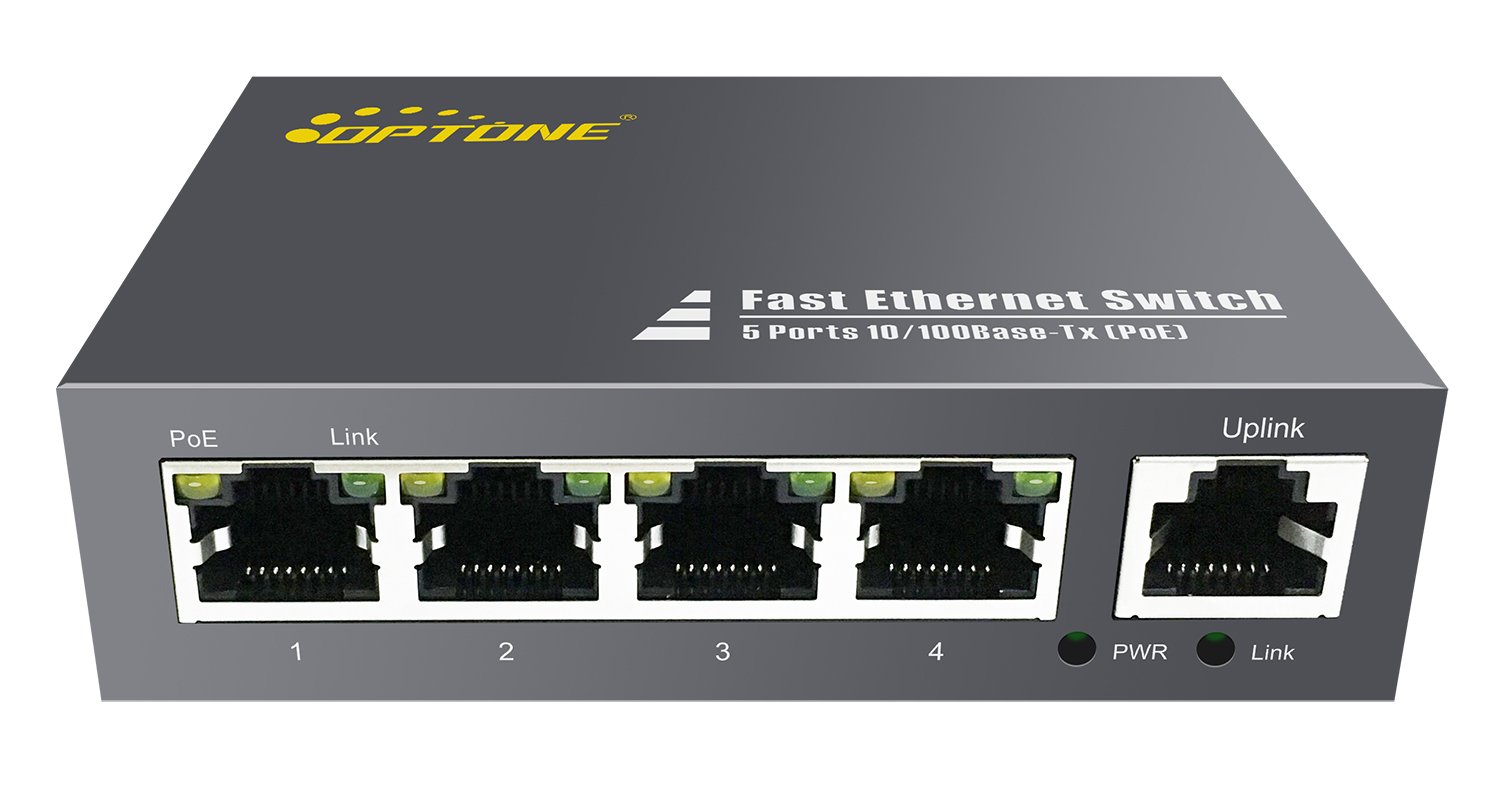
The choice between fixed optical interfaces (SC, ST, FC) and pluggable modular cages defines how you budget for optical loss, manage chassis thermals, and handle transceiver failures. SFP cages deliver field interchangeability across wavelengths and reach, but fixed optical ports eliminate external module procurement and provide robust mechanical coupling at lower unit costs. Selecting the right setup requires balancing your optical fiber plant constraints against physical maintenance realities across commercial fiber Ethernet switches.
Trade-Offs Between Modular SFP Transceivers and Fixed SC, ST, or FC Interfaces
Modular small form-factor pluggable (SFP) slots decouple the switch’s base chassis from the physical optical medium. A 1G or 10G SFP cage routes high-speed differential serialize/deserialize (SerDes) lanes straight to an edge connector, allowing you to seat 850nm multi-mode optics, 1310nm single-mode optics, or bidirectional (BiDi) transceivers in the same physical port. When a laser degrades or a link requires a bump from 2km multi-mode to 20km single-mode, you swap the transceiver in seconds without pulling the switch out of the rack.
That operational freedom introduces structural trade-offs:
- Connector density and mechanical durability: Fixed SC interfaces use a rigid push-pull latch with a 2.5mm ceramic ferrule, while ST interfaces secure with a bayonet twist lock. Both provide higher mechanical retention against axial pull and severe industrial vibration than an LC duplex connector clicked into an SFP module. FC interfaces go further with a threaded screw-on barrel, common in high-vibration plants. The trade-off is front-panel real estate: SC, ST, and FC connectors consume substantial surface area, capping fixed-port switch density at 8 to 24 ports per 1U chassis.
- Component cost and procurement friction: Fixed-port switches integrate the optical transmitter (laser diode or LED) and receiver (PIN photodiode or APD) directly onto the main printed circuit board (PCB). You buy one SKU, plug in your trunk patch cable, and the link comes up. SFP configurations turn every drop into a multi-part order: the switch chassis, the transceiver, and the matching LC patch cord. For enterprise installations with hundreds of edge runs, the per-port delta of discrete optics adds measurable budget pressure.
- Optical failure isolation: When an onboard optical diode fails on a fixed SC or ST switch, the entire switch port is dead. Restoring the link demands either a spare port on the chassis or a full unit replacement. With modular SFP slots, optical failures remain localized to the pluggable module; the switch board itself remains powered, running, and untouched.
Hardware Architecture and PHY Layer Processing in Copper-to-Fiber Aggregation
Bridging twisted-pair copper to optical fiber is not just a connector conversion. It requires dedicated Physical Layer (PHY) processing to translate electrical pulses into optical pulses while preserving clock recovery and frame integrity.
In fixed-interface designs, the Media Access Controller (MAC) communicates with an integrated PHY chip that drives optical transceiver sub-assemblies (TOSAs and ROSAs) directly soldered to the switch PCB. This tight trace routing eliminates an entire mechanical connector interface, reducing trace capacitance and high-frequency signal degradation between the SerDes output and the laser driver. In architectures powered by integrated Marvell chipsets, the switch fabric manages copper-to-fiber aggregation directly across non-blocking internal backplanes. This architecture handles full line-rate conversion between 10/100/1000Base-T copper drops and 100Base-FX or 1000Base-X optical trunks without dropped packets or buffer congestion.
Modular SFP switches, by contrast, route high-speed differential signal traces from the MAC/PHY to an SFF-8431/SFF-8472 mechanical cage interface. The pluggable module houses its own laser driver, post-amplifier, and internal EEPROM. That separation provides versatility, but it also means the host switch must supply regulated 3.3V power across the cage pins and manage the thermal load generated by discrete optical transceivers running inside tightly packed enclosures.
Deployment Factors: Greenfield Flexibility, Brownfield Plant Retention, and Edge Power Constraints
Selecting between modular and fixed interfaces depends heavily on the existing cable plant and site operating conditions.
Brownfield Plant Retention: Retrofitting legacy campuses often means connecting to existing OM1 or OM2 62.5/125µm multi-mode fiber terminated in ST or SC patch panels during the 1990s or early 2000s. Forcing modular SFP hardware into these links demands LC-to-ST or LC-to-SC hybrid patch cords, adding an extra optical mating interface that introduces an additional 0.3dB to 0.75dB of insertion loss per mated pair. Using fixed SC or ST fiber switches allows direct termination to legacy patch panels, conserving your optical power margin on long or degraded spans.
Greenfield Flexibility: Modern installations run single-mode fiber (OS2) terminated with high-density LC cassettes. Here, fixed-port hardware imposes a hard limit. SFP cages let you start a link at 1G using standard 1310nm optics, swap to 1490/1550nm BiDi optics if you run out of strand pairs, or slide in an optical transceiver rated for up to 80km when site requirements expand. That flexibility protects your switch investment from premature obsolescence.
Edge Thermal and Power Constraints: Discrete SFP modules add between 0.8W and 1.5W of thermal dissipation per port directly into the switch enclosure. In unconditioned NEMA enclosures, roadside traffic cabinets, or ceiling utility spaces, an 8-port or 16-port switch loaded with high-power transceivers can push cabinet temperatures beyond safe operating limits. Fixed optical interfaces operate with lower overall power draw and better chassis-level heat dissipation, running cooler in space-constrained enclosures.
Interface Selection Matrix for Campus Backhaul and Distributed Nodes
Use the following breakdown to match physical port types to your specific aggregation architecture:
| Deployment Parameter | Fixed SC / ST / FC Ports | Modular SFP Cages |
|---|---|---|
| Typical Port Density | 1 to 24 optical ports per 1U chassis | Up to 48 SFP cages per 1U chassis |
| Connector Types Supported | Fixed SC (push-pull), ST (bayonet), or FC (screw-thread) | LC (standard duplex or simplex for BiDi) |
| Physical Cable Plant Match | Legacy OM1/OM2 multi-mode and brownfield plant | Modern OS2 single-mode or OM3/OM4/OM5 multi-mode |
| Spares & Maintenance | Unit-level sparing; entire switch replaces failed optic | Component-level sparing; swap individual optical modules |
| Optical Power Budget Control | Pre-calibrated at factory; minimal connector loss | Variable based on selected transceiver grade (SX, LX, EX, ZX) |
| Cabinet Thermal Load | Lower power dissipation; passive cooling common on smaller units | Higher power dissipation from internal transceiver drivers |
To evaluate your network requirements, apply this decision checklist across each aggregation node:
- Inspect the physical fiber termination: If you are patching directly into installed SC or ST bulkhead panels and running 100M or 1G aggregation across multi-mode fiber, deploy fixed-port switches. You avoid hybrid patch cable clutter and eliminate the cost of separate pluggable modules.
- Audit your upgrade path: If the link might scale beyond its current optical budget, transition from dual-fiber to single-fiber WDM, or require single-mode optics later, select switches with modular SFP cages.
- Factor field maintenance procedures: For remote nodes where local staff lack splicing tools or specialized training, SFP cages let on-site technicians fix laser faults by hot-swapping a module, keeping downtime to minutes.
- Check thermal constraints: For sealed outdoor enclosures, evaluate total switch power consumption, factoring in approximately 1W per populated SFP cage against the ambient thermal rating.
Review factory-direct options across our range of commercial fiber Ethernet switches, spanning fixed SC/ST desktop media units to 16-port SFP managed aggregation platforms.
Need help selecting the right product?
Share your switch platform, link distance and quantity with an OPTONE engineer.
Talk to an Engineer →