
You are staring at a rack containing a mix of 15-year-old legacy multiplexers and brand-new Gigabit Ethernet switches. A phased network upgrade means these disparate systems must coexist and communicate for the next 18 to 24 months. You cannot afford the downtime required to rip and replace the entire infrastructure in a single maintenance window, nor can you justify the budget to double your optical inventory just to maintain temporary legacy links.
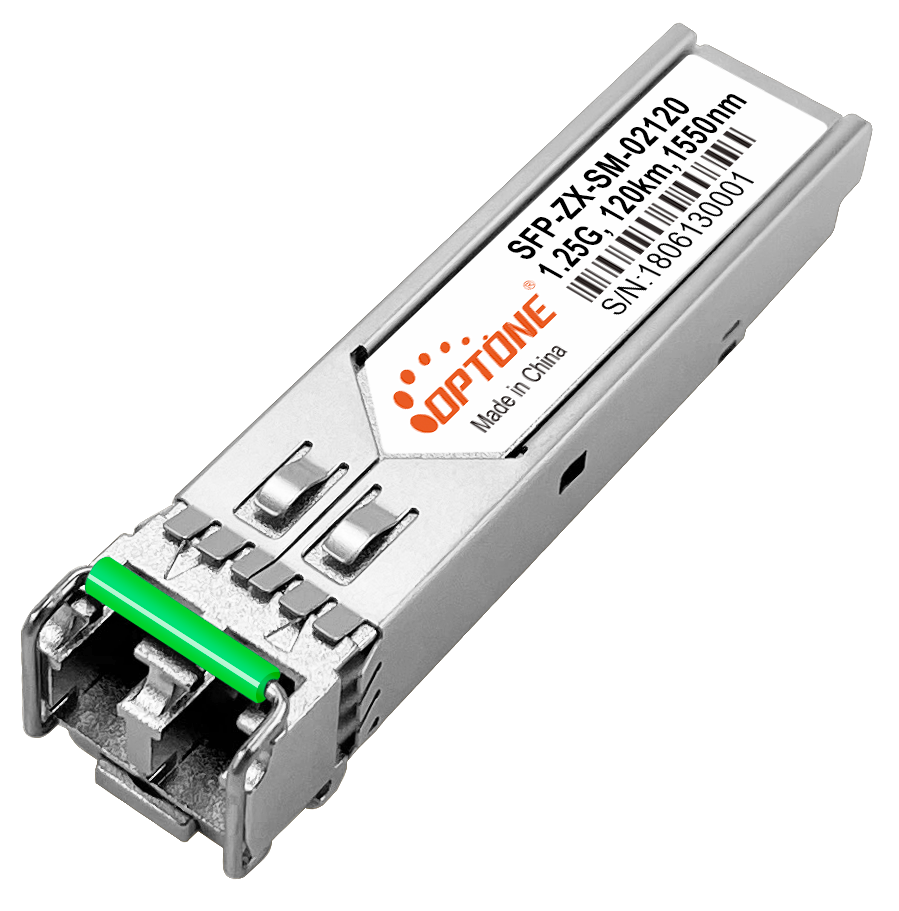
Network engineers solve this specific problem by deploying 155M to 2.5G multi-rate SFP modules. Instead of purchasing fixed-speed 155Mbps optics for the legacy telecom gear and separate 1.25Gbps optics for the modern hardware, one transceiver covers the entire spectrum. A multi-rate SFP adjusts to the required link speed, allowing you to stock a single SKU that works in both the old equipment today and the new equipment tomorrow. This approach prevents hardware mismatches during cutovers and dramatically reduces the volume of spare parts sitting idle in your depot.
Bridging Legacy SDH/SONET and Modern Ethernet in Phased Migrations
The primary conflict in any major network migration is protocol mismatch. Legacy telecom infrastructure was built on synchronous optical networking standards—specifically SDH (Synchronous Digital Hierarchy) and SONET (Synchronous Optical Networking). These systems operate at precise, fixed bit rates like 155Mbps (OC-3/STM-1), 622Mbps (OC-12/STM-4), and 2.5Gbps (OC-48/STM-16).
Modern enterprise and data center networks operate almost exclusively on asynchronous Ethernet standards, typically starting at 1.25Gbps for standard Gigabit Ethernet (GbE).
When buyers evaluate multi-rate SFP vs standard SFP modules, they often misunderstand how optical receivers handle incoming data. A standard 1.25Gbps standard SFP is manufactured with a fixed-rate clock and data recovery (CDR) circuit, or a fixed phase-locked loop (PLL). It expects to see a 1.25Gbps bit stream. If you plug that standard Gigabit module into a legacy switch and feed it a 155Mbps STM-1 signal, the receiver fails to lock onto the data. The link stays dark. The switch throws an error.
SDH/SONET compliant SFP transceivers designed for multi-rate operation bypass this limitation. OPTONE Multi-Rate SFP modules utilize wideband receiver components that can either auto-negotiate the link speed or allow the host device’s MAC (Media Access Control) layer to dictate the line rate without hardware interference. This means the exact same physical module can be inserted into an older ATM switch running at 155Mbps on Monday, and moved to a new aggregation switch running at 2.5Gbps on Friday.
The operational benefit is immediate. Field technicians no longer arrive at a remote site with the wrong optic. The risk of plugging a Gigabit module into an OC-12 port and accidentally isolating a remote branch office disappears entirely.
Core Operating Scenarios for 155Mbps to 2.5Gbps Modules
The flexibility of varying data rates is only useful if the physical transceiver can survive the environment where it is deployed. Multi-rate optics are heavily utilized in two distinct scenarios: harsh edge environments and long-haul telecom links.
Integrating Legacy Telecom with 2026 Edge Computing Architectures
Telecom operators are currently pushing compute power out of climate-controlled data centers and into the edge—cell tower base stations, industrial manufacturing floors, and remote utility substations. These environments are hostile to sensitive optical equipment.
A standard commercial-grade transceiver is rated for 0°C to 70°C. If you deploy a commercial module in an unventilated outdoor street cabinet during a Texas summer, the internal ambient temperature will easily exceed 70°C. When a laser overheats, its threshold current shifts. The laser begins to output less optical power, the center wavelength drifts, and bit error rates spike until the link drops entirely. Conversely, in freezing conditions, condensation and thermal contraction can cause physical component failure.
This is where industrial multi-rate SFP modules become mandatory. Built with temperature-hardened components, these industrial variants operate safely from -40°C up to 85°C. They allow utility companies to connect legacy SCADA (Supervisory Control and Data Acquisition) systems running at 155Mbps over fiber to modern industrial Ethernet switches, all while surviving inside enclosures exposed to extreme weather.
Scaling from 300m Data Center Links to 80km Metro Networks
Distance is the second major variable. The OPTONE series covers the full spectrum of reach requirements through four distinct module classifications: SX, LX, EX, and ZX.
Inside a data center or a large office building, a multi-mode multi-rate SFP 300m module (the SX variant) handles short intra-rack or inter-floor connections. These use 850nm VCSEL (Vertical-Cavity Surface-Emitting Laser) technology, which is cost-effective but strictly limited by modal dispersion over multi-mode fiber.
Once traffic leaves the building, single-mode fiber is required. The LX modules step up to 1310nm lasers to push signals 10km to 20km. EX modules increase the transmit power and receiver sensitivity to reach 40km.
The real engineering challenge occurs at the metro edge. A single-mode multi-rate SFP 80km module (the ZX variant) utilizes a highly precise 1550nm DFB (Distributed Feedback) laser. At 1550nm, optical attenuation (signal loss) in the fiber is at its absolute lowest, but chromatic dispersion becomes a severe threat. The pulses of light begin to spread out as they travel over 80 kilometers. If they spread too much, one bit bleeds into the next, destroying the data payload. ZX modules require exceptionally tight spectral widths to prevent this dispersion, making them the most critical components to source from a reliable manufacturer.
Technical Evidence: MSA Compliance and OEM Interoperability
Procurement teams frequently make a critical error when sourcing optics: assuming that physical fit guarantees logical function. A transceiver might slide perfectly into an SFP cage, but if the switch rejects it, the network remains down.
Reliable hot-pluggable multi-rate optical transceivers must adhere to two foundational documents: the SFP MSA (Multi-Source Agreement) and the SFF-8472 standard.
The SFP MSA dictates the physical dimensions, the electrical pinout, and the basic signaling protocols. It ensures the module physically fits and powers up. SFF-8472 is arguably more important for daily operations. This standard defines the protocols for Digital Diagnostic Monitoring (DDM), also known as Digital Optical Monitoring (DOM). DDM allows network administrators to monitor real-time parameters inside the transceiver, including temperature, laser bias current, transmit optical power, and receive optical power.
Without DDM, an optical link is a black box. If an 80km ZX link begins to fail because a backhoe disturbed a fiber splice 40 miles away, DDM alerts the administrator that the receive power is dropping toward the critical failure threshold. You can schedule a repair before the link drops. Without DDM, the link simply dies without warning.
However, basic MSA compliance is not enough to guarantee a module will work in proprietary hardware. Major network equipment manufacturers like Cisco, Juniper, and HP actively restrict third-party optics. When you insert a transceiver into a Cisco switch, the switch reads a specific memory chip inside the SFP via the I2C bus. If the vendor name, part number, and cryptographic checksum on that EEPROM do not match Cisco’s approved list, the switch places the port into an “err-disable” state.
To prevent this, you must specify OEM compatible multi-rate SFP modules. OPTONE addresses this at the factory level. Every module is 100% tested and the EEPROM is specifically coded to mimic the exact vendor strings required by the target switch. This factory-direct coding bypasses vendor lock-in, providing plug-and-play interoperability at a fraction of the cost of OEM-branded optics.
A Checklist for Specifying Factory-Direct Multi-Rate Optics
Selecting the right transceiver requires matching the optical physics to the network topology. A failure to calculate your optical power budget accurately will result in dropped packets and intermittent link failures. Use this checklist to define your requirements before ordering.
- Determine the required rate spectrum: Confirm the lowest speed of your legacy equipment (e.g., 155Mbps for older SDH gear) and the highest speed of your modern switches (e.g., 2.5Gbps for aggregation links). Ensure the chosen module covers the entire span.
- Calculate your true optical power budget: Never specify a long-haul module based purely on the advertised distance (like 80km). Distance is a theoretical maximum based on ideal fiber conditions. You must calculate the actual link loss based on fiber attenuation, splice counts, and connector degradation.
Optical Power Budget (dB) = Minimum Tx Power (dBm) - Minimum Rx Sensitivity (dBm)
Link Loss (dB) = (Fiber Length [km] × Attenuation Rate [dB/km]) + Splice Losses + Connector Losses
Operating Margin = Optical Power Budget - Link Loss
Your calculated Operating Margin must remain above 3dB to account for future component aging and emergency fiber repairs.
- Specify the thermal environment: If the module will be deployed in a standard climate-controlled data center, commercial temperature (0°C to 70°C) is sufficient. If it will sit in an outdoor telecom cabinet, specify industrial temperature (-40°C to 85°C) to prevent laser drift.
- Document the target switch models: Gather the exact make and model numbers of the switches and routers where the modules will be installed. Provide this list to the manufacturer so the EEPROM can be flashed with the correct OEM vendor codes, preventing err-disable port lockouts.
Migrating a network across different protocol generations is complex enough without fighting hardware compatibility issues. By standardizing on OPTONE Multi-Rate SFP transceivers, you eliminate the guesswork from phased upgrades, secure your optical budgets, and ensure seamless backward compatibility across your entire infrastructure.
Need help selecting the right product?
Share your switch platform, link distance and quantity with an OPTONE engineer.
Talk to an Engineer →